 -55% OFF
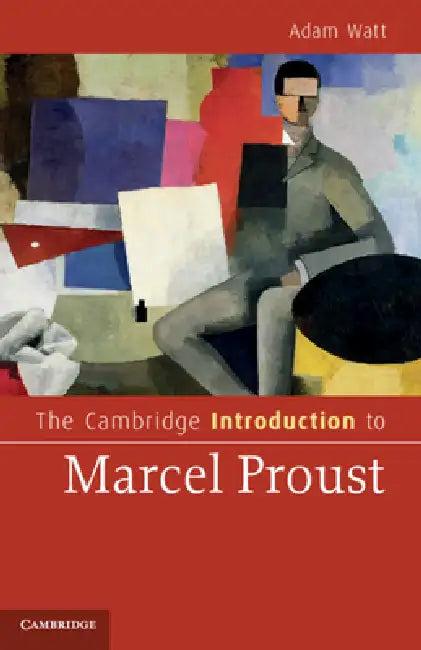
The Cambridge Introduction to Marcel Proust (English, Adam Watt)
4.6(6 reviews)Inclusive of all applicable taxes. Free shipping on orders above ₹499, else ₹49 flat.
Available Offers
- 🚚Free Delivery — Free on orders above ₹499, else ₹49 flat
- 💵Cash on Delivery — Pay when your order arrives
- ↩️15-Day Easy Returns — Hassle-free return policy
- 🔒Cash on Delivery — Pay safely when your order arrives
Check Delivery
Specifications
| Publisher | Cambridge University Press |
| Language | English |
| ISBN-13 | 9780521516433 |
| ISBN-10 | 0521516439 |
| Author | Adam Watt |
Product Description
Here on GlowMirror, you'll find The Cambridge Introduction to Marcel Proust filed under Cambridge University Press -- everything you need to know is covered below.
About the Book
Proust's 'A la recherche du temps perdu' ('In Search of Lost Time', 1913─27) changed the course of modern narrative fiction. This Introduction provides an account of Proust's life, the socio-historical and cultural contexts of his work and an assessment of his early works. At its core is a volume-by-volume study of 'In Search of Lost Time', which attends to its remarkable superstructure, as well as to individual images and the intricacies of Prou…
ISBN: 9780521516433
Book Insights
What You'll Learn
- ·In-depth exploration of topics covered in The Cambridge Introduction to Marcel Proust
- ·Key concepts explained with clarity and practical examples
- ·Insights valuable for anyone studying or working in Cambridge University Press
Who Should Read This
Beginners and newcomers to the subject, as well as curious general readers.
Key Highlights
- ·Brand new physical book delivered across India
- ·15-day hassle-free return policy
Customer Reviews
Fascinating study
Fascinating work on Proust, his style and his master work. To my mind, the first chapters of "The Cambridge Introduction to Marcel Proust" constitute a true "introduction" to Proust and his "oeuvre". Among other information, it explains that what passes as Proust's other works ("Jean Santeuil", "Les Plaisirs et les Jours", "Contre Ste-Beuve") are reworkings of drafts and notes that Proust wrote, sometimes at great length, but never really completed; only "A la Recherche du Temps perdu" and articles published by Proust during his lifetime are completely his own. The main part of the book, however, while a brilliantly annotated précis of the seven volumes of "In Search of Lost Time", must be very difficult to follow, for a neophyte using this book as an introduction to Proust. This said, and having read Proust (which is why I grab everything I can find on Proust), I found Mr Watt's descriptions of Proust's style, metaphors and ideas, well researched and especially clear, since some of these concepts must be close-to-impossible to verbalize and properly set into words. An extensive list of books, studies, films, TV programmes, or even, societies about or, around Proust, complete the book.
A first-rate introduction
Books written by academics are conspicuously under-reviewed here, I imagine because other academics are frightened of treading on toes. However, some deserve to be reviewed and as someone who is not a member of the Academy, perhaps I can step into the breach.This is in my opinion the best relatively short introduction to the subject that has so far been produced. Some writers try to emulate Proust's style, with a rather extravagant use of metaphorical language, and this can be a cover for not having really got to grips with the text.Not so here. This book is concise, up-to-date, impressively well informed both as to the text and to the secondary literature, and equipped with enough critical apparatus to enable the reader to move on to more specific areas of interest.Talking of moving on, another somewhat longer introduction of the same quality is A Reader's Guide to Proust's In Search of Lost Time by David Ellison and there is also a very interesting collection of essays edited by Adam Watt entitled Marcel Proust in Context, both published by Cambridge.